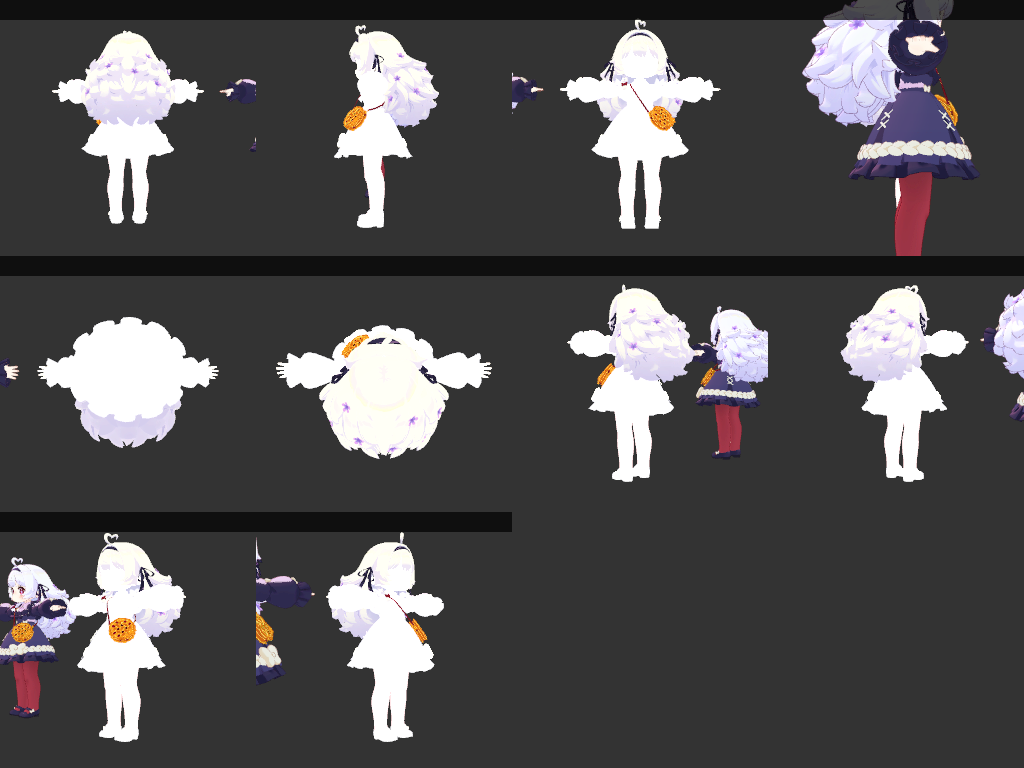
Cornet V0.0.1: Color Loss Bug Report
This article delves into a specific bug report concerning the avatar Cornet, version v0.0.1, within the dsgarage PierCamera project. The issue, identified under discussion category dsgarage and PierCamera, highlights a critical visual glitch where the avatar's clothing and hair colors are missing after conversion using FBX4VRM. This detailed report provides valuable insights into the problem's context, technical specifications, and potential causes, offering a comprehensive understanding for developers and users alike.
Bug Report Overview
This bug report, linked to parent Issue #300, focuses on the avatar named Cornet, specifically version v0.0.1. The report, identified with ID 8d1ee3b9, was generated on December 3, 2025, at 11:42:41 AM (JST), indicating a recent occurrence. The platform in question is fbx4vrm, suggesting a problem within the FBX to VRM conversion process. This information immediately sets the stage for understanding the scope and timeline of the issue.
Detailed Report Information
- Parent Issue: #300 - This link provides context and potentially related issues.
- Avatar Name: Cornet - Clearly identifies the affected avatar.
- Version: v0.0.1 - Specifies the software version where the bug occurs.
- Report ID: 8d1ee3b9 - Unique identifier for tracking this specific report.
- Platform: fbx4vrm - Highlights the FBX to VRM conversion process as the area of concern.
- Date/Time: 2025-12-03T11:42:41+09:00 - Provides a precise timestamp for when the issue was reported.
Environmental Context
Understanding the environment in which the bug occurred is crucial for replication and debugging. The report provides detailed information about the software versions and hardware specifications used during the conversion process. This environmental context is essential for developers to accurately diagnose the issue and implement effective solutions. The key environmental factors include:
Software Versions
- FBX4VRM Version: 0.0.1 - Pinpoints the exact version of the conversion tool.
- Unity Version: 2022.3.22f1 - Specifies the Unity engine version used.
- UniVRM Version: Unknown - Indicates a potential gap in information, which might be relevant.
- Render Pipeline: Built-in - Clarifies the rendering pipeline used within Unity.
The specific versions of these software components can have a significant impact on the conversion process. Compatibility issues or bugs within these versions could contribute to the color loss problem. Identifying the UniVRM version, in particular, could provide further clues, as it directly handles VRM avatar specifications within Unity.
Hardware and Operating System
- Platform: Windows 11 (10.0.26100) 64bit - Specifies the operating system.
- Processor: AMD Ryzen 7 3700X 8-Core Processor - Details the CPU, providing information about processing power.
This hardware information helps in understanding the resources available during the conversion process. While less directly related to color loss, it can still be relevant in identifying performance bottlenecks or hardware-specific issues.
Conversion Results and Errors
The report meticulously documents the outcome of the FBX to VRM conversion, including whether the process succeeded, the time taken, and any specific errors encountered. This section provides a clear picture of the immediate consequences of the bug and helps narrow down the potential causes. The key conversion details are:
- Success: ❌ No - This indicates that the conversion process failed to produce the expected result.
- Processing Time: N/A ms - The processing time is not available, potentially due to the failure occurring early in the process.
- Failed Processor: N/A - The specific processor that failed is not identified, suggesting a more general issue.
- Error Message: N/A - The absence of a specific error message makes diagnosis more challenging, as it suggests the problem might not be a straightforward error condition.
The failure of the conversion process, coupled with the lack of a specific error message, points towards a potential issue in the way the avatar's materials or textures are being handled during the conversion. It suggests that the problem might lie in the interpretation of the FBX data or the application of materials within the VRM format.
Avatar Skeleton and Material Information
To understand the avatar's structure and how it might be affected, the report includes detailed information about the skeleton and materials. This data is crucial for identifying potential issues related to bone structure, material assignments, or texture handling. The key skeletal and material details are:
Skeletal Structure
- Humanoid: Yes - Indicates the avatar is designed with a standard humanoid skeleton.
- T-Pose Valid: Yes - Confirms that the avatar is in a valid T-pose, which is essential for proper rigging and animation.
- Bone Hierarchy Valid: Yes - Verifies that the skeletal hierarchy is correctly structured.
- Total Bones: 164 - Provides the total number of bones in the skeleton.
- Missing Recommended Bones: UpperChest - Highlights a potential issue, as the UpperChest bone is recommended for humanoid avatars.
The skeletal information suggests that the avatar has a generally well-formed structure, with a valid T-pose and bone hierarchy. However, the missing UpperChest bone could indicate a potential issue in the avatar's rigging or animation setup. While not directly related to color loss, this could contribute to unexpected behavior during animation or pose adjustments.
Material Properties
- Total Materials: 5 - Specifies the number of materials used in the avatar.
The material count gives an idea of the complexity of the avatar's appearance. The color loss issue might stem from how these materials are being processed or converted. A mismatch in material properties or texture assignments could lead to the observed visual glitch.
Notifications and User Feedback
The report also includes a summary of notifications generated during the conversion process, as well as user feedback on the issue. This qualitative information provides valuable context and insights into the user experience. The key notification and feedback elements are:
Notification Summary
- Info: 0 - Indicates the absence of informational messages.
- Warning: 1 - Highlights a warning message, which could be relevant to the issue.
- Error: 0 - Confirms the absence of error messages, consistent with the conversion results.
The presence of a warning message, without any accompanying error messages, suggests a potential issue that doesn't necessarily halt the conversion but might lead to unexpected results. Investigating the warning message is crucial for understanding the root cause of the color loss.
User Comment
- User Comment: 服と髪の色が無くなっている (The colors of the clothes and hair are missing) - Provides a direct description of the issue from the user's perspective.
This user comment clearly articulates the core problem: the avatar's clothing and hair colors are missing. This feedback corroborates the visual glitch and emphasizes the severity of the issue from a user experience standpoint.
Visual Evidence: Screenshot Analysis
The report includes a screenshot that visually demonstrates the color loss issue. Analyzing this visual evidence is critical for understanding the specific nature and extent of the problem. The screenshot, accessible via the provided URL (https://raw.githubusercontent.com/dsgarage/PierCamera/main/screenshots/report_96_8d1ee3b9.png), clearly shows the avatar with missing colors on both the clothing and hair.
By examining the screenshot, developers can gain insights into whether the issue is a complete absence of color, a shift in color, or a problem with texture mapping. The visual evidence serves as a tangible representation of the bug, making it easier to communicate and address.
Potential Causes and Troubleshooting Steps
Based on the information provided in the bug report, several potential causes for the color loss issue can be identified. Troubleshooting steps can then be devised to systematically investigate and resolve the problem.
Material and Texture Issues
- Incorrect Material Assignment: The materials might not be correctly assigned to the corresponding meshes in the VRM model.
- Texture Loading Failure: Textures might fail to load during the conversion process, leading to a lack of color.
- Shader Compatibility: The shaders used in the original FBX model might not be compatible with the VRM format or the Unity render pipeline.
- Texture Format Incompatibility: The texture formats might not be supported by the VRM converter or the Unity engine.
To troubleshoot these issues, developers can examine the material properties in both the original FBX model and the converted VRM model. Checking for missing textures, incorrect shader assignments, and incompatible texture formats is crucial.
Conversion Process Problems
- FBX Parsing Error: The FBX4VRM converter might encounter an error while parsing the FBX file, leading to incomplete conversion.
- VRM Export Issue: There might be a bug in the VRM export process that causes material information to be lost.
- UniVRM Integration: Issues in the integration between FBX4VRM and UniVRM could lead to problems with material handling.
To address these potential issues, developers can review the FBX4VRM conversion logs for any error messages or warnings. Trying different conversion settings or using a different FBX export configuration might also help.
Code Example (Illustrative)
While a specific code solution depends on the exact cause, a general approach to material assignment in Unity and UniVRM might look like this:
using UnityEngine;
using VRM;

public class MaterialFixer : MonoBehaviour
{
    public VRMImporterContext vrmContext;

    public void FixMaterials()
    {
        if (vrmContext == null || vrmContext.Root == null)
        {
            Debug.LogError("VRM Context or Root is null.");
            return;
        }

        Renderer[] renderers = vrmContext.Root.GetComponentsInChildren<Renderer>();
        foreach (var renderer in renderers)
        {
            // Check if materials are missing or incorrect
            if (renderer.sharedMaterials == null || renderer.sharedMaterials.Length == 0)
            {
                Debug.LogWarning({{content}}quot;Renderer {renderer.name} has missing materials.");
                // Attempt to re-assign default materials or log the issue
            }
        }
    }
}
This illustrative code provides a basic example of how to check for missing materials on renderers within a VRM model. The actual fix would involve re-assigning the correct materials, potentially by referencing a material library or re-importing the model.
Conclusion
This detailed bug report for Cornet v0.0.1 highlights a significant visual glitch involving color loss during FBX to VRM conversion. By examining the environmental context, conversion results, avatar structure, and user feedback, a comprehensive understanding of the issue can be achieved. Potential causes range from material and texture problems to conversion process errors. Further investigation and troubleshooting, guided by this report, are essential for resolving the bug and ensuring a seamless user experience.
For more information on VRM avatars and troubleshooting, visit the VRM Consortium website.